
The NEBOSH General Certificate assessment is divided into two main units:
- NG1/IG1: Management of Health and Safety
- NG2/IG2: Risk Assessment
I want to start by making clear that the NEBOSH risk assessment is graded on a “pass” or a “refer.” pass/fail basis. If you get a “refer,” it means you failed, and NEBOSH will allow you to resubmit.
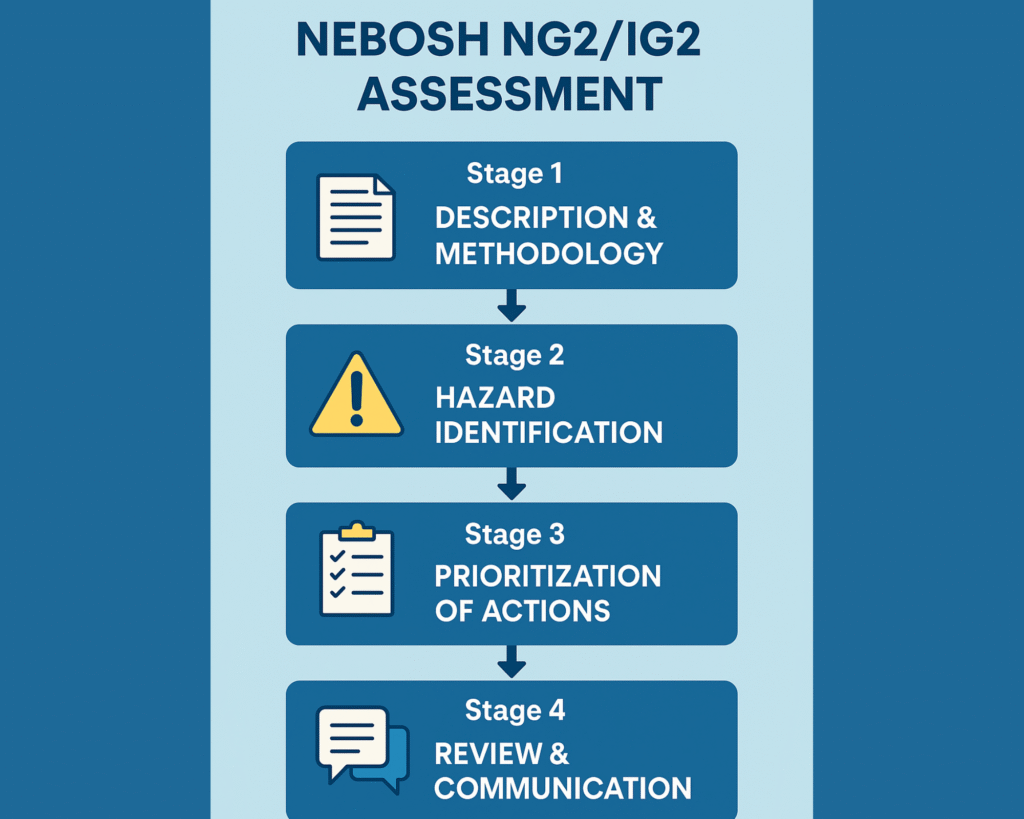
If you want to know how to pass the NEBOSH Certificate Unit NG2/IG2 Risk Assessment, you have to meet the 4 stages of the criteria.
- Stage 1: Provide a clear description of the workplace and methodology.
- Stage 2: Identify at least ten hazards across five different categories.
- Stage 3: Prioritize three hazards with clear, justified actions.
- Stage 4: Outline your communication and review plans.
If you receive a “refer” instead of a “pass,” review NEBOSH’s feedback carefully to identify any missing elements or sections that could use further detail.
If you’re looking to complete your qualification and apply these skills in your workplace, keep reading—I’ll share tips from my experience as a NEBOSH instructor at THS to make sure you’re ready for success.
What is the NEBOSH Certificate Unit NG2/IG2 Risk Assessment?
The NEBOSH General Certificate is divided into two main units:
- NG1/IG1: Management of Health and Safety
- NG2/IG2: Risk Assessment
The NEBOSH risk assessment (Unit NG2/IG2) is where theory meets practice.
It’s a hands-on evaluation where you’ll assess workplace risks and hazards based on real-life observations. Instead of a traditional exam, the assessment lets you demonstrate your practical ability to identify hazards, evaluate risks, and recommend actions.
You’ll need to complete this assessment using the NEBOSH-provided form, which contains specific criteria for each section, ensuring that your submission meets the standards required to pass.
It’s the final hurdle in your qualification, requiring you to conduct a detailed workplace risk assessment that showcases your ability to:
- Conduct a general risk assessment in your workplace.
- Recommend improvements
- Plan effective actions
- Document your findings in a way that demonstrates both comprehension and practical application.
Structure of the Risk Assessment
The risk assessment consists of four key stages:
- Description of your organization and methodology
- Risk assessment and hazard identification
- Prioritizing actions with justification
- Review, communication, and follow-up
A Break Down of the Four Stages
Stage 1: Describe Your Organization and Methodology (150-200 words)
The first part of your assessment requires a clear, concise description of your workplace or chosen assessment area. Aim for about 150 to 200 words for this description.
Provide details like the organization’s name, location, primary activities, number of employees, and the type of work conducted.
This background helps NEBOSH evaluators understand the context of your risk assessment. For example, describe a medium-sized manufacturing company focused on automotive parts, with operations running from 8 a.m. to 5 p.m.
You should also specify whether you’re assessing the whole organization or just one department. Make it realistic and relevant to your daily environment.
After this, include a methodology explaining how you conducted your assessment.
You need to write out how you collected your information, whom you consulted, and how you identified hazards.
Pro tip: Be specific but concise. Remember, your examiner isn’t familiar with your workplace, so provide enough context for them to understand your risk assessment decisions.
Stage 2: Risk Assessment
This is where you’ll demonstrate your practical understanding of workplace hazards.
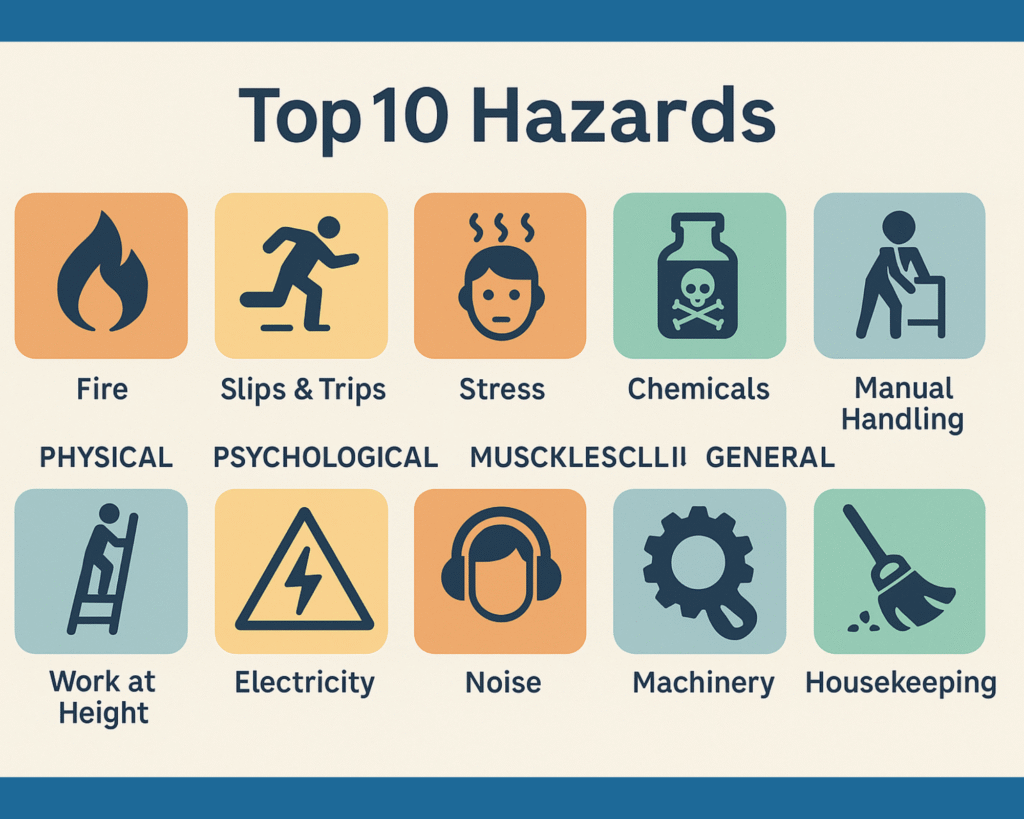
You’ll need to identify at least 10 different hazards across five different categories from the NEBOSH syllabus. These categories could include:
- Physical and psychological hazards,
- Musculoskeletal health,
- Chemical and biological agents,
- Workplace general issues,
- Work equipment hazards
- Fire hazards
- Electricity hazards
For each hazard, you must document who might be harmed (e.g., employees, contractors, visitors), current controls in place, further actions required, and the responsible personnel for each action
I strongly recommend you do not make the mistake of listing all hazards from a single category.
Listing fewer than ten hazards or failing to cover the required categories may result in a “refer” (fail), meaning you’d need to resubmit your assessment.
Stage 3: Prioritize actions and justify your choices (350-400 words)
After identifying hazards, you’ll need to select and justify your top 3 hazards that require immediate attention and justify your choices. These should be your top priorities based on risk, potential impact, and urgency.
Justify your choices using moral, legal, and financial arguments. Consider referencing relevant legislation, such as the Health and Safety at Work Act, and discuss the potential consequences of inaction, like financial penalties or health impacts on employees.
Pro-tips: Back up each action with a clear, logical reasoning so it will make your risk assessment more credible and easier to follow.
Only list three actions, as NEBOSH will not grade more than that. Including more or less than three priority actions will lead to a fail.
Stage 4: Review, communicate, and verify actions
You need to demonstrate your ability to effectively communicate your findings.
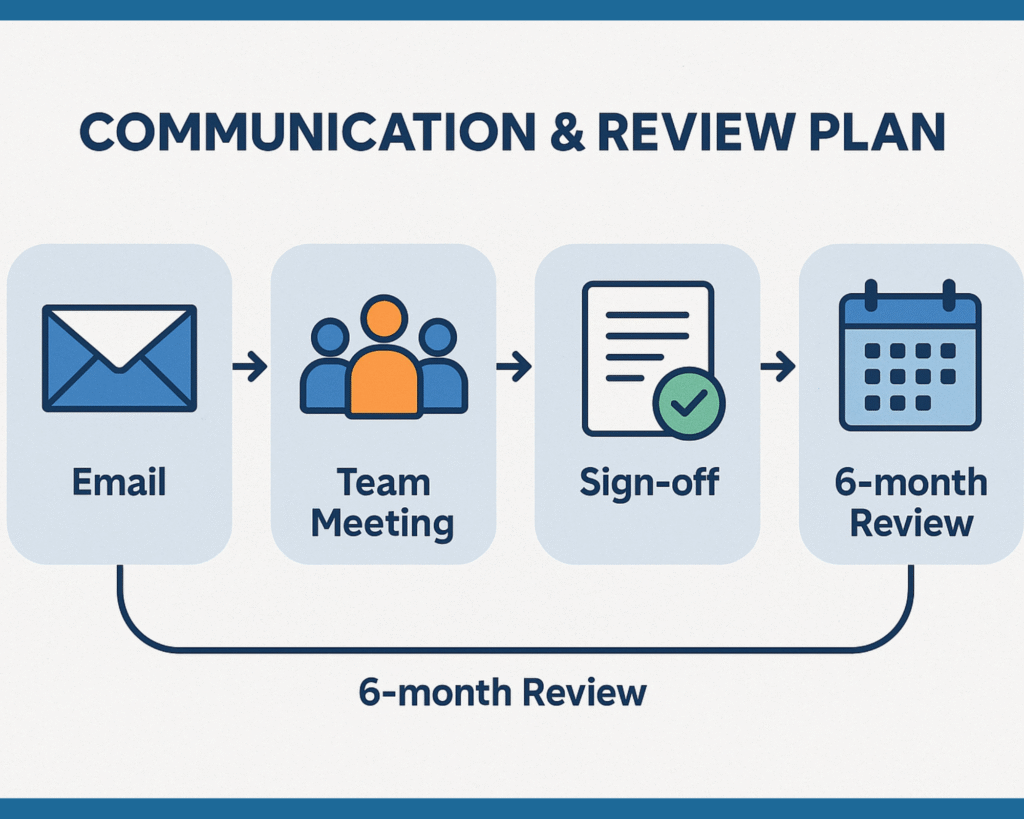
This final section asks you to outline how and when the risk assessment findings will be reviewed and communicated to relevant stakeholders. Specify the communication channels (e.g., email, meetings) and indicate when a follow-up assessment will occur to ensure all actions were effective.
You should include:
- A realistic review date for your assessment
- How the results will be communicated to relevant parties
- A follow-up plan to ensure actions have been implemented, such as a follow-up inspection or scheduled report-back.
Set a clear review timeline, as NEBOSH expects a commitment to periodic checks, usually every six months to a year. Regular reviews reinforce your commitment to workplace safety and ensure that risks continue to be managed appropriately.
Final Steps: Submission process and results
Before submitting your risk assessment, check that all sections are complete and meet the NEBOSH requirements.
You’ll need to register for your practical assessment, and while the new syllabus doesn’t enforce strict deadlines, it’s advisable to choose a submission date that works for you.
Once your assessment is complete, submit it to your learning provider. NEBOSH typically provides results within 50 working days, and if you’ve passed your Open Book Exam, you’ll receive your certificate shortly thereafter.
FAQs
Before you start your assessment, you should download NEBOSH’s provided assessment documents.
These resources include examples, marking criteria, and guidelines, helping you understand the structure and expectations.
Studying the sample assessment report and familiarizing yourself with the NEBOSH template will give you a clear picture of how to frame your findings and meet each requirement.
These resources can offer valuable insights and examples, so you’re clear on what to include in each section.
Additionally, consult your course tutor to confirm your workplace is suitable for the assessment, as some locations may not offer the scope you need.
Ideally, your risk assessment should focus on your current workplace. This makes the assessment not only relevant but also beneficial to your organization. If your workplace doesn’t offer enough scope, consult with your course advisors to find an appropriate alternative.
There’s no letter grade here; you’ll either receive a “pass” or a “refer.” If you get a “refer,” NEBOSH will allow you to resubmit. Before re-submitting, make sure you:
– Confirm that you identified at least ten hazards from five different categories.
– Included three priority actions, with justifications for each.
– Documented a clear communication and review plan.
Final thoughts

Completing the NEBOSH NG2/IG2 risk assessment is an invaluable opportunity to apply what you’ve learned and make a real impact on workplace safety.
I want to point out that this isn’t just about passing an assessment. You need to develop skills that can genuinely improve health and safety for everyone involved.
In order to pass, I recommend that you focus on producing a thorough, well-reasoned assessment that demonstrates your understanding of risk management principles.
Ready to take your NEBOSH course with us? We offer comprehensive training designed to ensure your success. Book your NEBOSH General Certificate Course with us today and ensure you’re fully prepared for your NG2/IG2 assessment.