
If you need CHAS accreditation in Essex, the process is the same as anywhere in the UK: pick the right CHAS level, gather your health and safety evidence, complete the online assessment, and renew every year. What changes is the support. Train in Health and Safety is based in Waltham Abbey, Essex, and helps contractors across the county prepare their CHAS application.
In this guide, I will explain what CHAS is, the three levels, what it costs, the documents assessors expect, and the most common reasons applications get held up.
If you operate in Essex, understanding CHAS Essex requirements can help you prepare with greater confidence. You can review your existing arrangements and identify missing evidence early. This gives you time to address documentation gaps before they become a problem.
What is CHAS Certification?
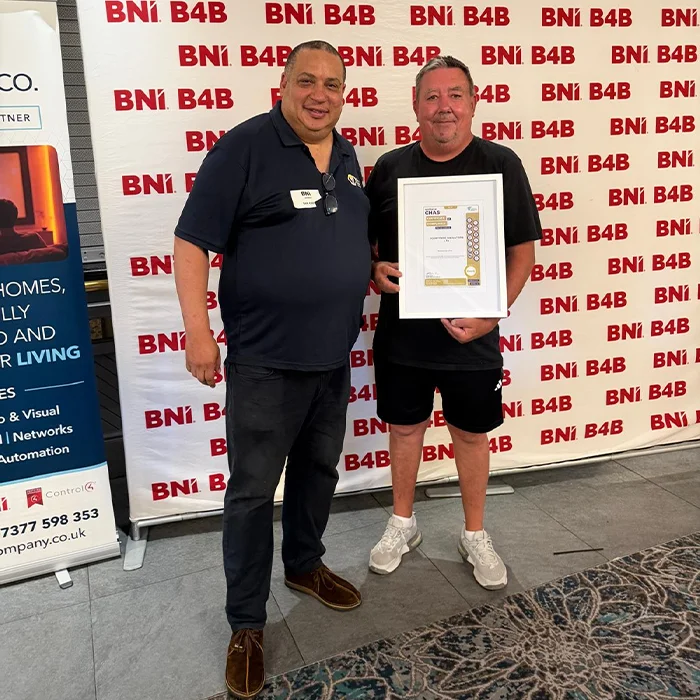
CHAS certification reflects completion of an assessment of the organization against specific requirements. This accreditation is often used in contractor pre-qualification and supply chain management. In your case, the process requires not only completing an application but also providing appropriate documents related to your business’s health and safety.
The Contractors Health and Safety Assessment Scheme. It was set up in 1997 so contractors could be assessed once instead of completing a different health and safety questionnaire for every client. It is now run by Veriforce CHAS, and it is a founding member of SSIP (Safety Schemes in Procurement), which means other SSIP schemes can recognise a CHAS assessment.
These documents must reflect the real work of your business. They must also show how you evaluate workplace risks. Possible subjects may be:
- Health and safety policies
- Risk assessments
- Safe working procedures
- Training records
- Insurance information
- Workplace safety documentation
- Relevant supporting certificates
To be accredited, you complete an online assessment and upload evidence of how your business manages health and safety. A CHAS assessor reviews it before anything is approved.
Who needs CHAS accreditation in Essex?
Any contractor whose clients ask for it. CHAS is common in construction, building services, facilities management, cleaning, security and specialist trades. Public sector buyers such as councils, schools and housing providers, and main contractors working on Essex sites, often ask for an SSIP-recognised accreditation before they invite you to tender. Without one, a bid can be rejected before your price is even looked at.
CHAS is not a legal requirement, but under CDM 2015 clients and principal contractors must check that the contractors they appoint are competent, and many use SSIP accreditation as the quick way to do it.
If you are not sure which scheme a client wants, ask them before you apply. Some name CHAS specifically; others accept any SSIP scheme. Our guides to SSIP accreditation in Essex, SafeContractor and Constructionline explain the alternatives.
Why does your business need CHAS accreditation?
Many organisations use CHAS Accreditation as part of their contractor and supplier pre-qualification process. They want evidence that businesses they appoint have considered the health and safety risks associated with their work.
Achieving the appropriate CHAS accreditation can help your business:
- Meet client requirements: Demonstrate that your business has undergone an independent assessment against the relevant CHAS standard. As such, some companies face accreditation requirements when preparing tenders or pre-qualifications. Having all necessary paperwork on hand can simplify the process.
- Support tender applications: Provide recognised evidence when applying for contracts and joining approved supplier lists.
- Reduce repeated paperwork: Relevant SSIP mutual recognition arrangements can reduce the need to repeat parts of a health and safety assessment.
- Improve health and safety arrangements: Identify missing policies, procedures, training records and other areas that need attention.
- Demonstrate business readiness: Give prospective clients evidence of how your organisation manages workplace risks.
CHAS accreditation does not guarantee that you will win a contract or that your business is suitable for every project. Clients may still carry out additional checks based on the work involved.
CHAS Standard, Advanced and Elite: which level do you need?
| Level | What it covers | Usually suits |
|---|---|---|
| CHAS Standard | Health and safety assessment and SSIP recognition | Subcontractors who need to meet basic SSIP requirements |
| CHAS Advanced | Standard plus the former PAS 91 pre-qualification modules (including areas such as modern slavery, financial and environmental) | Medium and larger contractors bidding for wider tenders |
| CHAS Elite | The Common Assessment Standard, covering 13 risk management areas | Contractors working for the public sector or on large projects |
Public sector buyers have been expected to use the Common Assessment Standard since 27 June 2024 under Procurement Policy Note PPN 03/24. If you want public sector work, ask whether Elite is the safer choice from the start.
What documents do you need for CHAS accreditation?
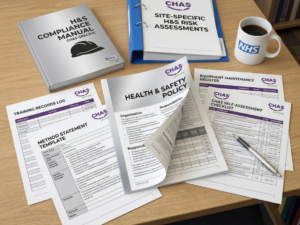
The documents required depend on your business activities, workforce, selected CHAS level and the assessment questions presented in your application. However, contractors should be prepared to provide evidence covering the following areas.
- Health and safety policy: Your policy should explain your organisation’s commitment to workplace health and safety, signed and dated, with your general statement, who is responsible for what, and your practical arrangements. A written policy is a legal requirement if you employ five or more people.
- Risk assessments and method statements (RAMS): specific to the work you actually do, not generic templates. These should identify workplace hazards, who may be affected, the risks involved and the control measures used to work safely.
- Competent health and safety advice: a qualified person in the business, or an external adviser under an agreement.
- Employee training and competence records: Your business should be able to demonstrate that employees have the appropriate knowledge, training and competence for their roles
- Insurance: Prepare current insurance certificates relevant to your business activities.
- Subcontractor controls: how you check the competence and insurance of anyone you use.
- Accident and incident records: Keep appropriate accident records and evidence of how incidents are reported, investigated and reviewed or a written statement that there have been none.
- Other relevant evidence: Depending on the assessment level and work undertaken, you may also need evidence relating to COSHH assessments and safety data sheets, health and safety inspections, environmental management, quality management, business governance and other Common Assessment Standard requirements.
The key is consistency. Your risk assessments should match the work described in your procedures, and your training records should match the responsibilities you have given to staff. Assessors notice when documents describe different businesses.
Sole traders and small firms can apply too. If you employ fewer than five people you don’t need a written policy, but you still need evidence of competence, task-specific risk assessments and insurance.
How to apply for CHAS accreditation
- Register and choose your level. Create your company profile on the Veriforce CHAS portal and select Standard, Advanced or Elite.
- Complete the questionnaire and upload evidence. Name files clearly and make sure they are current and readable.
- Pay and wait for assessment. A CHAS assessor reviews your submission against the SSIP criteria. Timescales depend on your package and how complete your evidence is, so check current times with CHAS if you have a tender deadline.
- Answer any queries. If something is missing, the assessor lists what is needed and gives you a deadline to respond.
- Get approved. You receive your accreditation, and buyers can check your status through the CHAS client portal and the SSIP Portal.
Why CHAS applications get held up
Incomplete documentation adds extra work during the preparation phase, as it may require more information or updates to existing documents. Avoid this issue by reviewing all documentation before submission to confirm it is still relevant. Avoid using generic documentation that hasn’t been checked for relevance to your business, as the paperwork should represent your company, not another company’s activities.
Frequently asked questions about CHAS accreditation
How long does CHAS accreditation last?
CHAS accreditation lasts 12 months. You renew it every year to stay listed.
How much does CHAS accreditation cost in 2026?
CHAS fees are yearly and rise with the size of your business. CHAS publishes on their site that the Standard costs £429/year +VAT, Advanced costs £659/year +VAT, while Elite costs £909/year +VAT. On top of the CHAS fee, there is the time it takes to write policies and risk assessments from scratch. That is where many small businesses choose to bring in support. Please note that our fees for application help are quoted separately.
Can a sole trader get CHAS accredited?
Yes. Sole traders and small businesses can apply. You still need evidence of competence, task-specific risk assessments and valid insurance.
Can I apply for CHAS without a health and safety consultant?
Yes. Businesses can apply directly through CHAS. However, professional support may help if you are unsure about the documentation, assessment questions or evidence required.
What is the difference between CHAS Standard, Advanced and Elite?
Standard covers health and safety and SSIP. Advanced adds the former PAS 91 modules. Elite covers the Common Assessment Standard, which public sector buyers are expected to use.
Can I use another SSIP accreditation for CHAS?
Under SSIP’s “Deem to Satisfy” process, a valid certificate from another SSIP scheme may be accepted, but some clients still ask for the scheme they name. Check with the client and with CHAS.
Do you help with Chas applications or Chas renewal in Essex?
Yes. We are based in Waltham Abbey, Essex, and help businesses prepare and submit their CHAS application.
Train in Health and Safety can discuss support with reviewing documentation and preparing for a CHAS renewal. Contact the team at +44(0)20 8059 3633 or email info@traininhealthandsafety.com.
What happens if my CHAS application is unsuccessful?
Read the assessor’s feedback and identify what information or evidence needs to be corrected or supplied. Follow the instructions and deadlines provided by CHAS. If you are unsure how to address the issues, consider seeking professional help.
Can professional support help with CHAS preparation?
Professional assistance may help if you are unsure what the assessment requires. A professional adviser like Sam will review your many documents and identify any gaps. It is especially true for small businesses. In these cases, you can manage your company’s operations, clients, employees, and health and safety all at once.
CHAS accreditation help in Essex
Preparing for CHAS certification requires you to consider documentation and health and safety arrangements. You will need to provide the right evidence that reflects how your business controls workplace risks. This practical advice will help you assess your current documentation and identify what should change. It will make the process easier as you prepare for the assessment.
Train in Health and Safety is based in Waltham Abbey, Essex, close to the M25, and helps contractors across Essex (including Epping, Harlow, Chelmsford, Brentwood, Basildon, Colchester and Southend-on-Sea), as well as nearby London and Hertfordshire and the whole of the UK. We have supported businesses with CHAS, SafeContractor, Constructionline and wider SSIP accreditation for over a decade.
If you need CHAS Accreditation services, you can discuss your needs and documentation. Train in Health & Safety Ltd offers services that include both application and documentation preparation.
Starting early gives you time to fix gaps before a tender deadline. Contact us on +44 20 8059 3633 or info@traininhealthandsafety.com, or book a free consultation. See our full CHAS accreditation service.